Justification

As I tore apart my computer in search of texts to enrich my article for Learning, Media, and Technology, I found this piece which I delivered (or didn’t — I have a habit of jumping off-book and riffing in front of a live audience) before the Academic Affairs Committee of the Board of Trustees on April 15, 2011.

I’ve always wanted to make the world a better place, and thought that the way we raise children is central to any/all such undertakings. As an undergraduate at Northwestern University, I studied Education & Social Policy, with minors in political science and French. I did original, on-site research for my honors thesis, visiting child care centers in Paris, Oslo, and urban Chicago. I reviewed the way each culture balanced the social-emotional and the cognitive — Were they tensions in opposition? Were they intertwined partners?

Spongebob Squarepants got me to graduate school. My friend Jenn and I were babysitting a bunch of five-year-olds and, while we happened to be on the street of a housing project in Boston, I suspected that this scene could have unfolded anywhere in America, maybe anywhere around the world…

Here we go round the mulberry bush… the ice cream truck chimed. My friend Jenn asked the kids what they wanted.

“Spongebob!” they cried, eyes glued to the image of a frozen treat shaped like he who lives in a pineapple under the sea.
“They’re out of Spongebob,” Jenn explained patiently. “What’s your next choice?”
“Dora!”

POP! Goes the weasel!

That’d be Dora the Explorer, another children’s TV character who the youngsters could ice cream-ily cannibalize. Now, I’d been a kid who worshipped at the electric fireplace, effortlessly memorizing movie & TV dialogue, gobbling books, acting in plays. But I always, ALWAYS, had firm ideas about chocolate and vanilla. Was something different going on here?*

I started out by looking at the extent to which young people interacted with electronic media, analyzing children’s media content according to unsavory themes, like aggression, materialism, xenophobia, and stereotypical gender roles, which I continued at USC. Then I became interested in influencing the content itself, first through disseminating research to studios with Dr. Stacy Smith, then by supporting entertainment-education efforts with Dr. Sheila Murphy and Hollywood, Health & Society. From there I became interested in what people do with the content, and that’s what led me to Dr. Henry Jenkins and, in a sense, brought me back to square one. How do we make the world a better place, shift the way we raise children, address the social-emotional and the cognitive?

This skills-rich approach seems the way to go, in my opinion. Not only is each person, each community, and each moment in time distinct, but people hate being told from on high what to do. It doesn’t make sense to come up with one fixed set of solutions, one “universal” plan, and tell every person out there to do it. It just doesn’t work. But let’s say you help them to develop skills, fundamental capacities for diverse application. Then individuals’ and communities’ possibilities are limitless. They can realize their own potential, and build their own solutions that reflect their unique circumstances.

At RFK Community Schools, via the Explore Locally, Excel Digitally after-school program, I’m helping those skills to take hold. The skills pertain to social-emotional competence (SELs; self-awareness, self-regulation, social awareness, relationship skills, and responsible decision-making), and new media literacies (NMLs; defined as “a set of cultural competencies and social skills that young people need in the new media landscape” (Jenkins, Clinton, Purushotma, Weigel & Robison, 2006, p. 4)). Despite the words “new” and “media” in their label, NMLs are neither new nor exclusively for or about media. They’re especially useful in the context of new media, but they’re fundamental, time-honored, digitally agnostic skills. They’re about enriching learners with useful, versatile capacities that help them think sharper, work better, and appreciate fuller the ethical ramifications of their actions.


As thirteen-year-old me once sang in Beaver Dam, Wisconsin, playing the role of Mrs. MacAfee in Harand Theater Camp’s summer 1993 production of Bye Bye Birdie, “I don’t know what’s wrong these kids today!”

Plates

Lately I’ve been saying, “I’ve got a lot on my plate.” When I want to switch it up, I disclose the more colorful, “I’m trying to keep multiple plates spinning.” But I’ve been thinking (always dangerous), This paints plates* too reductively. Plates aren’t disembodied, external objects; they don’t merely host gorge-inducing portions or demand frantic maintenance. Plates define our very foundation. We’re built on plates. If living in Los Angeles has taught me nothing else, it’s that our wellbeing depends on the stability, balance, and flow of these plates.

So what’s on my professional plate? Very glad you asked… I’ve enabled comments so that anyone who’s interested can discuss a project with me — this post is mostly meant to inform and engage, and only minimally to vent. Thus, in no particular order:

-co-writing/editing a $1.35M grant to the National Science Foundation
-co-writing an article for journal Learning, Media and Technology on Explore Locally, Excel Digitally, an after-school program my colleagues and I designed and instructed during Spring 2011
-final edits + table layout for Sunukaddu chapter in African Childhoods: Survival, Education and Peace-building in the Youngest Continent
-co-designing challenges for PLAY! platform (which my colleagues and I will present at the Digital Media & Learning Conference and the Annenberg Innovation Lab Festival)
-considering user interface, affordances, and embedded biases of PLAY! platform with colleagues
-brainstorming ideas for Dojo, continuing to meet with folks and think through my dissertation plan, and designing presentation to GameDesk
-writing dissertation prospectus
-co-writing case study about Summer Sandbox and Playing Outside the Box for eBook on participatory models of professional development
-co-facilitating the USC Serious Games Network and co-developing outline for panel I will moderate on serious games’ business models, hosted by USC Marshall School of Business, with panelists Laird Malamed & George Rose
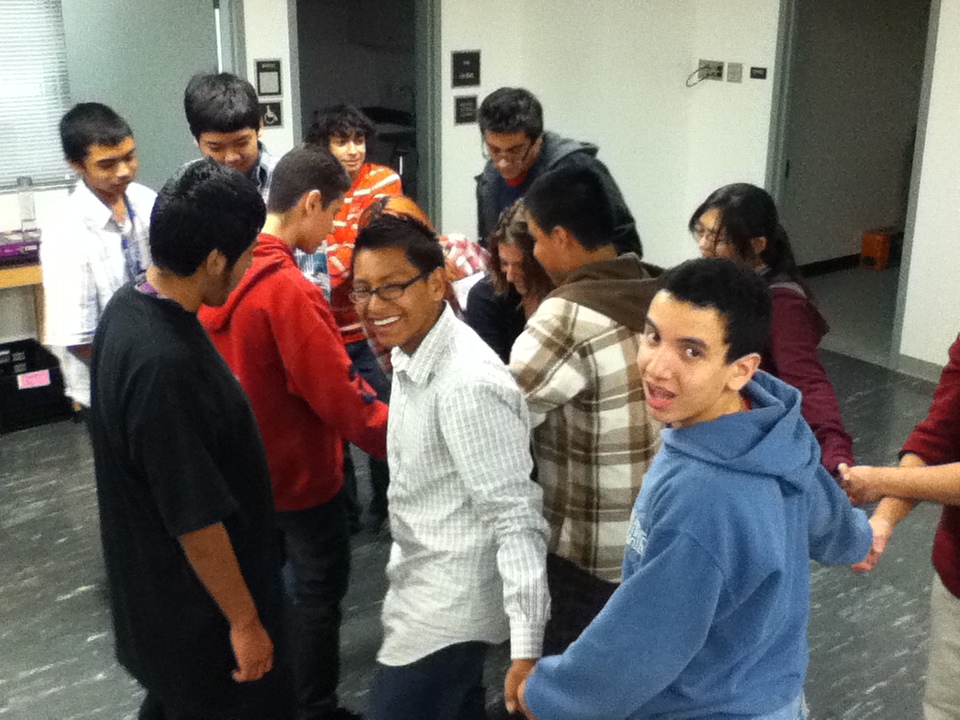
-analyzing data from Laughter for a Change with RFK-LA, a weekly after-school improv workshop with high school freshmen which I participant-observed during Fall 2011, and making a presentation for the Digital Media & Learning conference
-participating on a panel addressing Henry Jenkins‘s Convergence Culture
-revising NCA conference paper on grassroots epistemologies for submission to a scholarly journal and for a chapter in Global Health Communication Strategies in the 21st Century
-attending a gala for the Khmer Anti-Poverty Party, whose membership I’ve instructed in leadership strategies
-writing five letters of recommendation for last semester’s students
-considering a possible joint paper on The Hunger Games
-attending various meetings and workshops
-leafing through stacks of library books and recent Amazon purchases + blogs and articles
-taking on the serious/fun business of playing serious games

Now what’s for dessert?


*My mom paints plates too! You should see her bowl for Rosh Hashanah honey — it’s a beaut!

Onward


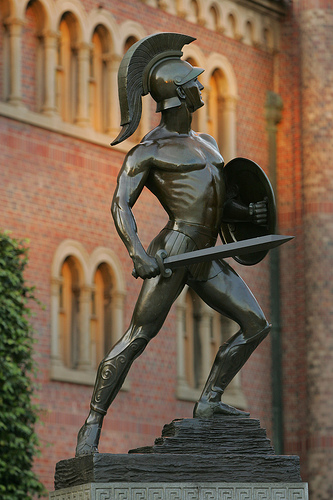
The University of Southern California (USC) is well known for football, and all of the glory and scandal that comes with it. Some folks also associate USC with privilege and derisively refer to it as the “University of Spoiled Children.”

But USC knows, as I have learned well, that you can’t just rest on your laurels.* We must look to the future.

The Strategic Vision identifies three paths forward, which constitute the heart of our academic vision.

Transforming Education for a Rapidly Changing World highlights building the ranks of transformative faculty and reinventing education at the undergraduate, graduate and postdoctoral levels. It also focuses on the need to insure student access to education and our commitment to accountability.

Creating Scholarship with Consequence emphasizes the growing importance of translational research, creative work and professional practice that make a significant impact on society. This will require increasingly more interdisciplinary and inter-professional collaboration.

Connecting the Individual to the World calls for promoting local and global engagement to foster mutual understanding. This begins with self-knowledge and self-reflection, critical thought, appreciation of diversity, aesthetic sensibility, civility, and empathy across all spheres of life. Given the broad scope and depth of our academic programs, we must not lose sight of the importance of cultivating human wholeness.
-Elizabeth Garrett, USC Provost and Senior Vice President for Academic Affairs, 1/9/12

These values echo my own and if I were more jingoistic, I might be inclined to say something like “I am USC.”

My latest inspiration for my dissertation reflects this commitment to transformative education, meaningful contribution, and human wholeness. It incorporates positive deviance, participatory action research, participatory design, participatory culture, participatory learning, serious games, and social and emotional competence.

Project Plan:

1. Gather baseline data on a youth population (utilize multiple methods to triangulate members’ capacity to emotionally regulate and perform in Dojo).
2. Identify positive deviants (PD’s), or those whose adeptness at emotional regulation qualifies as aberrational; in other words, individuals who thrive despite the odds, without access to special resources.
3. Identify their emotional regulation strategies — How do they do what they do?
4. Work with these PD’s to suggest game design modifications and curriculum components for Dojo.
5. Liaise with GameDesk developers regarding game design modifications and take lead on realizing complementary curriculum.
6. Facilitate outreach efforts with PD’s and other interested youths, spreading the word about Dojo and PD’s emotional regulation strategies.
7. Gather endline data on youth population (utilize multiple methods to triangulate members’ capacity to emotionally regulate and perform in Dojo).

Of course, this plan is ambitious and will undergo intensive revision — part of the process. For now, this is the blue sky I’m eyeballing.

Fight on.


*Pun absolutely intended.

Legacy


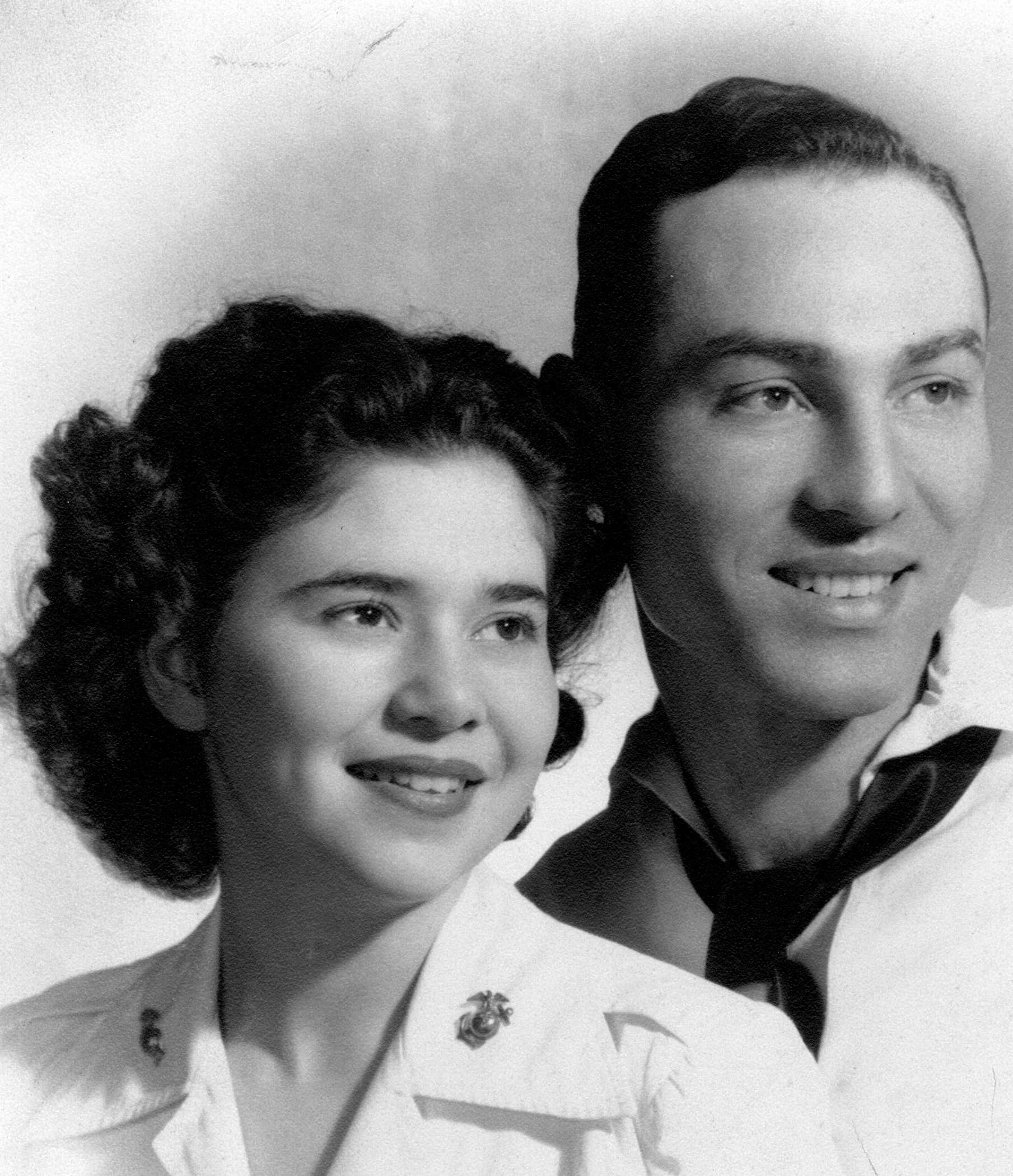
It’s been 67 years since my paternal grandparents posed for this wedding photo. When I sit for mine, I won’t be as young as they were and I doubt I’ll be serving in the military. But I hope I’ll express their energy and integrity — I hope to this day I have, and will continue to do so, regardless of nuptials. What an honor that would be, and what a blessing to have benefited from my grandparents’ (and parents’) examples.

My father, their proud son, wrote the following biography for the Illinois Holocaust Museum and Education Center in Skokie (the city in which all four of my grandparents resided for decades, and my parents went to high school):

Eleanor Harris of Chicago, IL, enlisted in the Marines with her best friend, Mary Arkes, in 1943, when they were both 19 years old. Eleanor left Roosevelt College in Chicago and was sent to Washington, DC, as a Private 1st Class, where she worked in a clerical capacity believed to be in the Department of Maps. Justin Felt enlisted in the Navy in 1942, even though it represented a hardship since he was the sole support of his mother. He was first sent to the University of Minnesota for special courses based upon his initial entrance exam scores. Upon completion, he was assigned, as an Electrician’s Mate 3rd Class, to a secret project in Virginia involving torpedo guidance systems. Eleanor and Justin met in Chicago while both were on leave, the result of a blind-date “fix-up” from a mutual friend. They continued to correspond by mail and met when they could since both were stationed on the East Coast. They married in July 1945, while both were still in the service, just before both were returned to civilian status. Eleanor became an elementary school teacher and Justin returned to his position in the composing room of the Chicago Sun (later to become the Sun-Times). They were married for 45 years until their passing 5 months apart in 1990. They are survived by 2 sons, Richard and Robert, 3 grandchildren, and 2 great-grandchildren to date.

I remember the day my grandpa died. It was the first time I’d seen my father cry. This is what Dad emailed today to my uncle, brother, sister, and me:

Today was the 22nd anniversary of my father’s (Yosef ben Moshe) passing. I chanted the haftorah and associated prayers in his memory at shabbos services today, and also told a story about him to the congregation. I’m not sure if you ever heard it, but Mom had not, so here it is.

It goes back to the 50′s when dad worked for the Chicago Sun (later to merge with the Daily Times to become the Sun-Times) in the composing room. Television was in its youth then (we got our first, a Motorola floor-cabinet model in 1951), and dad and his printer-friend Jack Vrtjack decided that there could be a bright future in radio/TV repair. They were both very handy and soon became quite proficient (self-taught) in electronic repair. They dreamed of their own business, free from the shackles of corporate employment. But they decided on a trial-run, before they quit their day jobs.

One day, dad got a call from a woman whose set did not work. She turned the ON knob but to no avail. Dad came home from work and drove right to her house in Chicago. She showed him the problem, and he moved to the back of the set while she watched him work. There was high-voltage danger associated with the picture tube, and so the set had to be unplugged from the wall even to remove the back panel. Dad traced the cord to the wall and saw that the plug was already ajar. Before doing anything with the back panel, he pushed the plug all the way into the outlet and retried the set. It worked. That had been the problem.

He put his tools away and informed the lady that the service-call charge was whatever. She refused to pay. She said that apparently there had actually been nothing wrong with the set, and he had only spent 2 minutes or so without having had to “fix” anything. He argued with her for awhile about his travel time, gasoline, etc, but upon realizing just the sort of mind that he was dealing with, he let it go and left without having been paid. Plans for a business based upon dealing with the public were scrapped, and Dad (and Jack) remained at the newspaper, Dad for 45 years.

I learned from Dad via this episode that there are times to dig-in one’s heels, stand firm, and fight. And there are other times when, after appropriate consideration of the issues and the relative merit of a hard line, it is better to disengage and live to fight another day for something really important. This lesson served me well during my years dealing with the public professionally, and in my private life in general as well.

How can I ever express my gratitude for such a rich inheritance?


  • The 90th birthday of Ruth Feldman Marcus + Hanukkah celebrations
  • Auto-dialogue


    “Writing is, of course, Ev’s legacy. He used the process of putting felt tipped pen to paper as a means of threshing out the chaff, of refining his ideas, and, most bluntly, of thinking. Ev Rogers is an exemplar of E. M. Forster’s saying about human learning: “How do I know what I think till I see what I say?” Ev understood better than most of us that we do not know and then commit to write; rather, writing like talking is thinking, process not outcome. Creativity, as Max Weber said and as we know, is about bringing intellect to bear on the persistent and emotional pursuit of an idea until you’ve got it right. That’s how Ev Rogers engaged himself on a daily basis.”
    -Jim Dearing via Arvind Singhal

    I talk to myself. A lot.

    There, I said it. The jig is up! But evidently, this “quirk” of mine isn’t quite as far beyond the pale as I’d originally believed. Perhaps it isn’t even abnormal at all. (The fact that I audio-record my musings… well… now we might be getting into unique territory. But anyway.) The how of it, though, is worth closer examination. So is the why.

    According to the Mayo Clinic, “Self-talk is the endless stream of unspoken thoughts that run through your head every day. These automatic thoughts can be positive or negative.” The ramifications of their valence are serious. These stories we tell ourselves — about the world, notably about ourselves — structure our reality. Whether the world is a kind or mean place, whether effort can lead to change, whether we are good enough — those are difficult phenomena to measure objectively*, especially if they’re subconsciously articulated; mostly, we take these things on faith. And they not only impinge upon our psychic comfort, but they can sink or support our health. Some benefits that positive thinking may provide include:

    Increased life span
    Lower rates of depression
    Lower levels of distress
    Greater resistance to the common cold
    Better psychological and physical well-being
    Reduced risk of death from cardiovascular disease
    Better coping skills during hardships and times of stress

    So how do we talk to ourselves? Gently? Harshly? Fairly? Rationally? In which modes — deliberately or subconsciously; textually (e.g., via journaling), orally (e.g., via narrating), expressively (e.g., via dancing or painting), or behaviorally (e.g., via self-caring or self-harming)?

    For what purpose? Ev Rogers, mentor of my mentor, harnessed auto-dialogue to make sense of inchoate ideas and discover, in a sense, his own mind. Stuart Smalley, now Senator Franken’s (in)famous SNL character, tapped it to get through his day. In the emotion regulation game Dojo‘s current iteration, players are supposed to call upon positive self-talk in order to tolerate: a torrent of invasive questions, an unpredictable cyber handslap, and the temptation to slap back. I wonder whether this forum provides an ideal space for practicing positive self-talk. I wonder whether scenarios in which players must find the bright side in an ambiguous situation, or counter a derogation with an affirmation, might be more apt…

    What happens when we steal the mic, capture the conversation, program our cerebral talkradio DJs to only (or mostly) give voice to our nascent, deep, unique truths… and rhapsodize about our beauty? How will our worlds change? Then how will we change the world?


    *Is there such a thing as objectivity?
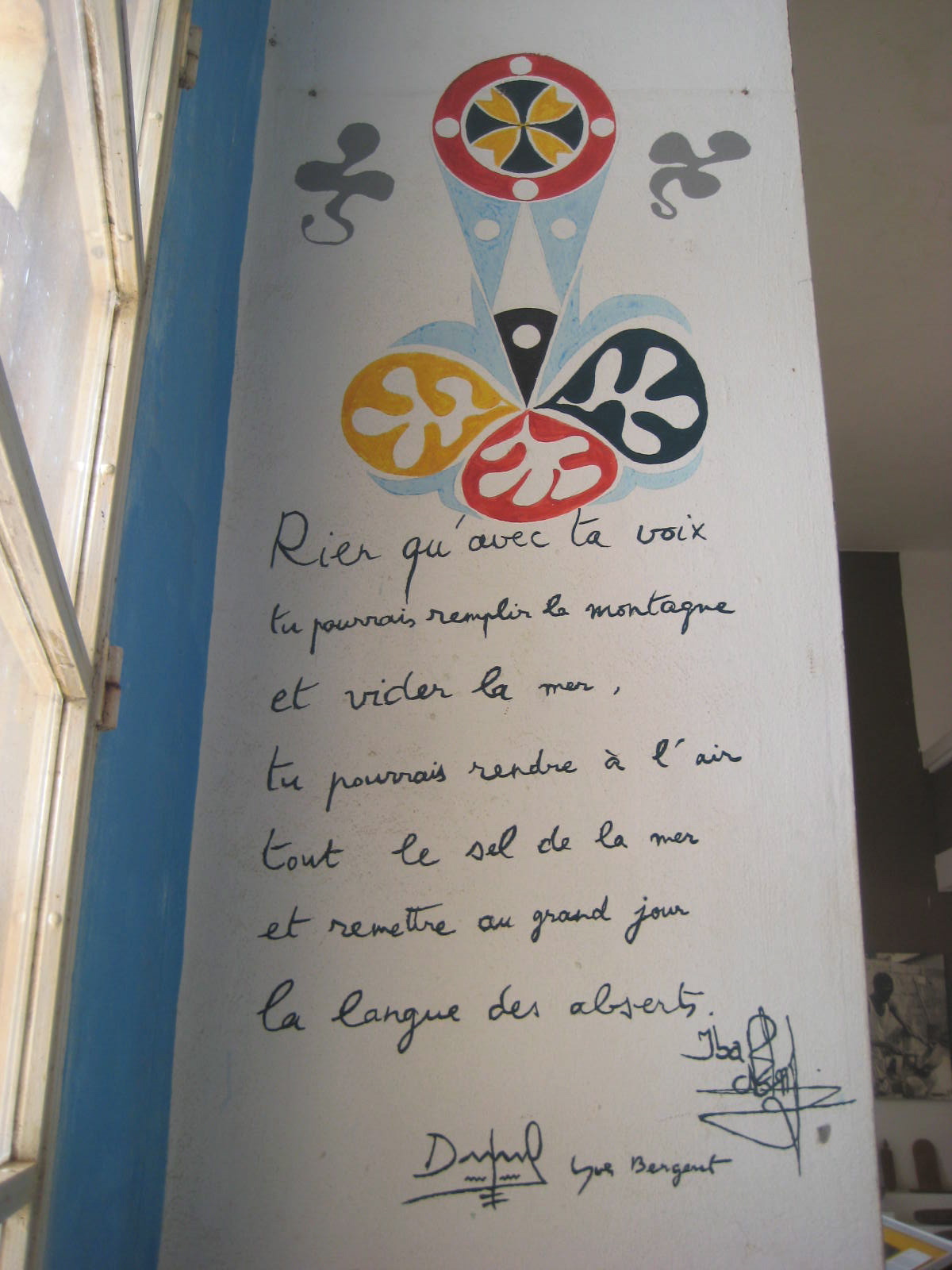
    NOTE: This photo was taken in a museum in St. Louis, Senegal, Summer 2010. It reads (according to my imperfect translation skills): “With nothing but your voice/ You can fill the mountain/ and empty the sea,/ you can deliver to the sky/ all the the salt of the sea/ and bring back one great day/ the words of those absent.”